Pholio
a novelette

He wanted, more than anything, to be remembered for a book. He will be. I only wish it were not for this one.
I would give a good deal, most of my own titles included, not to be writing these pages; introductions are meant for the living, who can at least blush at them. But a book is the only thing we make that goes on talking after the room has emptied, after the guests have found their coats and the host has gone up to bed, and Nick understood that better than anyone I have met. It is why he wanted his book so badly. It is why I have agreed to stand by the cover of his book and open it for you.
This sentence about our trade (our trade, I say, as if writing were a stall in the bazaar wedged between the cloth-merchant and the fellow who mends umbrellas) is something that every writer has had flung at him across a dinner table, usually by some mediocre man who has never finished anything longer than an email. It is attributed to Hemingway, who almost certainly never said it, a small inconvenience which has not prevented it from being printed on mugs, tote bags and, I am reliably informed, a range of novelty aprons.
I have always disliked it. It flatters us. It turns into martyrdom what is, nine mornings in ten, an old man in a cold room in a borrowed country, wrestling with the question of whether a woman goes upstairs before or after she takes off her shoes. I have published more books than is decent, and I have bled for precisely two of them. Both times on account of a bread knife, a stale loaf, and the kind of hunger that only arrives at three in the morning when the sentence will not come because none of us are good enough to write a piece of genius alone.
I met the author of this book once. Once! One dinner, in Kensington, in one of those long rooms where the English arrange their guests the way my grandmother in Bombay arranged her pickle jars along the kitchen shelf: by sourness or by sweetness, never mixing two flavours. I was placed opposite a tall, tidy, beautifully barbered Englishman in his early forties who was, I had been told before the soup, something enormous in money; the kind of man my father would have called a proper pukka sahib, and meant it as a warning. And I, God forgive me, talked about roses. He let me. Worse: he asked the second question, the one after the polite one, and a man who asks the second question about your roses is a man of whom you should be very, very careful. Halfway through the lamb I remembered my manners and asked him what he was working on. He told me about a fund. And I said something to him, which you will find in these pages and which I will not repeat here, because I said it the way a man flicks ash from a cigarette. But he caught it, as you will see, the way a man catches a coal: and held on.
You will want to know what kind of book this is. For a long while it is a comedy, and a very fine one; a comedy of manners in the old English style, all private views and glass rooms and a wife in grey silk, and its narrator is a magnificent, insufferable, heartbreaking specimen of a species this island has always produced better than any other on earth: the man who tells you precisely how vain he is, so that you will think him modest. Notice his sentences. They are short. They are cool. They wear a dinner jacket and do not crumple. He apologises for his feelings before he has had them. I have lived sixty-odd years on this damp rock and never learned the trick of it. My own sentences, as you have no doubt observed, go everywhere at once, like an angry mother-in-law. His go in a straight line, quietly, towards something, and you will not see what until you are standing at the edge of it with your toes over the drop.
So laugh at and with him. Please. He wanted you to. And somewhere around the middle (I could not tell you the page, which is the highest praise I know) you will notice that you have stopped laughing.
We are all, in this trade, the scared and breathless children of Scheherazade. For her a story was a postponement; one more tale to avoid death. It is a peculiar and a terrible thing to meet a man who struck the opposite bargain.
Which of the versions of Achilles was right, the young man who chose the bloodied glory of Troy or the old ghost who regretted it? I have spent half a century at a desk not answering that question, and I have come to suspect it is the only question there is. In my mother's language there is a word, kismet, which the English borrowed. Most of us are never asked to choose our kismet. We are spared the choice by cowardice, or children, or the mortgage, or simply because nobody ever comes to the door and offers.
Someone came to his.
You will know, because the newspapers made a tamasha of it, that he did not live to see this book in print. I will say nothing about how. The book tells it, and tells it better than the newspapers did, and a great deal better than I could. There has also been a mighty hullabaloo about how the book came to be written, and by whom, or by what; what djinn, what ghost in what wiring. I have put what I know of that at the back, where it can do the least damage. Read the book first. It was written to be read first.
I am told he meant to change the names. He did not have the time. The people in it, several of whom do not come out of it well, and one of whom, briefly and without a name, is me, have agreed to let them stand. I think that was brave of them. I am not at all sure it was brave of me.
I have read it four times. Each time I have reached the last page and sat a while with the light going, the way one sits in a car after a funeral, keys in hand, not yet ready to turn the engine and rejoin the living. I do not know how to describe Nick's kismet. I suspect the right word is one he would have found, in his cool, short, dinner-jacketed way, and I, with all my bazaar of words, have not.
He bled. Arré, how he bled. I do not recommend it. But I have read nothing in years that I would sooner press into a stranger's hands on a train.
Gloucestershire, with the roses cut back
Kreeshan Kapoor MBE
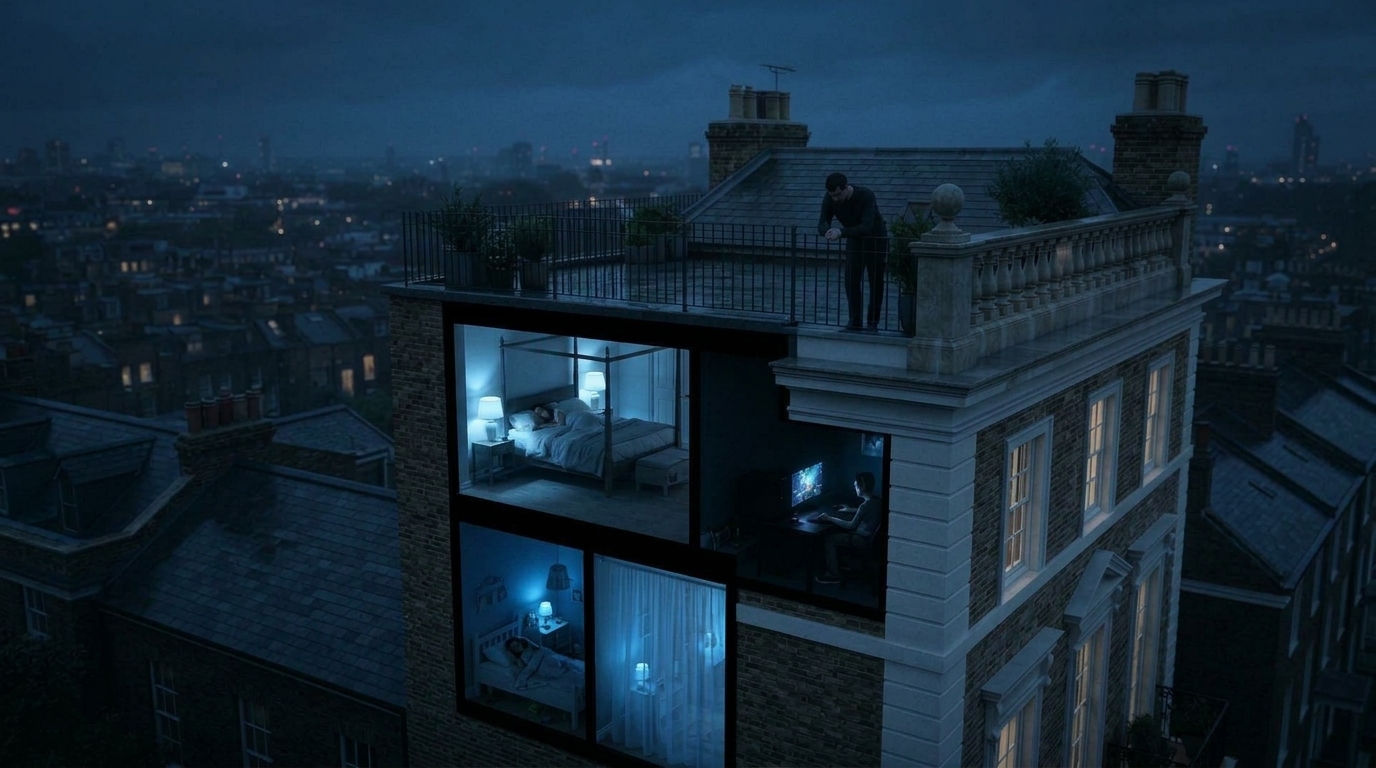
May the peri meni be upon you
So this was what it sounded like to hear a dog whistle. High, solid, drilling into the mind, stretching the ears open from the inside.
I opened my eyes and looked along the desktop where my cheek was resting. It was my desk. My Mac, the blank white document still bright, not yet on screensaver. My Montblanc Meisterstück, a present from my partner on the close of our third fund, its nib never once wetted. My pot of Blackwing pencils, which Marisol sharpened every Monday whether or not they had been used, and which had not. My fat-keyed calculator, the only object on the desk that had ever done an honest day's work.
You will want to know what I had been doing before I laid my face on the walnut. Yes, you: whoever is holding this once it has become a real book, with a proper cover and an introduction by somebody famous. I had been writing this manuscript. I should be precise, since precision was the one virtue I had carried out of my professional life intact: I had been about to write. There was always a moment, just before the first sentence, when the whole book was present at once, like the smell of rain before the rain, a thousand words as a single thought on the tip of my tongue. I would lean towards it. And then the whistling would come, and the white, and I would wake with my cheek on the wood and my mouth open, like a man who had been told something too important to remember. An epiphany in reverse.
From outside the study door, Serge was shouting at someone. His mother, or his sister. Not the maid; my son was always polite to the maid, which I chose to count as a moral achievement of my parenting. A pause. Then a door slamming upstairs, with the particular violence that sixteen-year-olds reserve for doors that they won't pay to repair.
I rose slowly. The saliva between my cheek and the desk was reluctant to let me go. I wiped the corner of my mouth with the heel of my hand and looked out of the window.
The plum tree was heavy with fruit again. It did this every September without being asked, without any visible anguish, and I had never once forgiven it. Louise would make buckets of jam from those plums, just as Serge had when he was her age, before apps and haircuts took over. I hoped my daughter would not give up the rite of the jam simply to win her brother's approval.
No headache. The whistle receding to a hiss, the hiss to the ordinary hum of a large house, all its fridges and filters breathing at once.
I looked at the Mac. A blank document. Not even a title. Not even a new, clever font selected.
I will tell you about the episodes now, because you will hear about them later from people who did not understand them, and they won't understand.
You have just seen the first kind. The second came after, on the rare mornings I got through. I would have written perhaps a page, perhaps a page and a half, and the page would be good. I knew it was good. And then a weight would settle on me, a great soft weight, like a black dog lying down on my chest, and for days afterwards nothing gave me any satisfaction or comfort. Not food, not Charlie, not the children, not the light on the Heath. My dreary, self-indulgent real work with my dreary, self-indulgent investees was the only bearable part of the day. After, I would lie in the guest room with the blinds down and listen to my family conduct their lives in the corridor, in lowered voices, as if somebody had died. Charlie told them it was a migraine. It was not a migraine. It was the price of a page.
This had happened more often than I liked to say. Twice, possibly three times. I did not keep count.
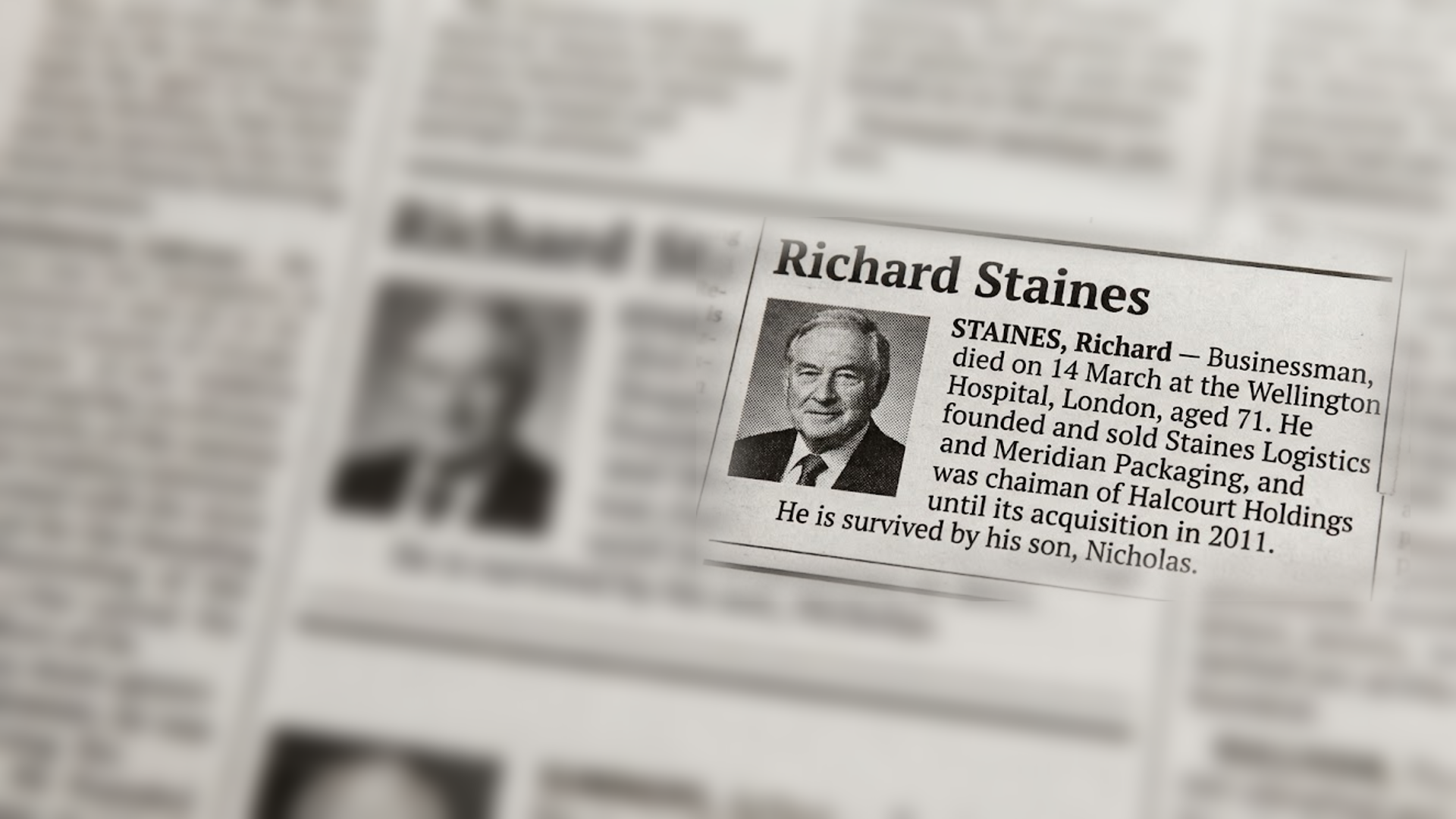
My father died at seventy-one in a private room at the Wellington, having built and sold two companies and a third that sold itself. His obituary in the Financial Times ran to forty-one words, two of which were survived by. I read it on my phone in the hospital car park and thought: that is the length of a good paragraph. A man spends seventy-one years and the world gives him a paragraph, and not even a good one. I remember the Bentley in the next bay was idling, and the driver was eating a sandwich. Egg. The whole car park smelt of egg and diesel and my father's paragraph.
I wanted more than a paragraph. I did not think that was unreasonable. I wanted one book, a single book that someone would press into a stranger's hands on a train in a hundred years and say, You have to read this, and the stranger would not know who I was, and it would not matter, because I would be the book.
Now, I can feel you leaning back in your chair, and I know the look you are wearing; I have seen it across my own breakfast table. You are right, of course. My misery was a luxury. It may have been my one true luxury left: the one thing nobody could deliver. It took a certain discipline of the soul to sit in a room with everything and want only the one thing you could not have, and to want it tastefully, without making a scene.
"Darling."
The door had opened and Charlie had walked in. Her amber hair was pinned up in preparation for the rituals that preceded an evening out, the long liturgy of creams and serums and small brushes, and she was wearing the grey silk robe that I had bought her in Milan and that she had since come to believe she bought herself. Her blue eyes surveyed my face, which must still have had the grain of the walnut on it. Then they travelled, unhurried, to the blank document.
Nineteen years with her had taught me every expression that face possessed. I could have catalogued them. I sometimes did, at dinners, when the conversation turned to schools. I watched her swallow what she had been about to say. It began with an A, I think, and had a question mark at the end, and it was very probably Again? She swallowed it and composed herself in a blink slowed by condescension.
"Leaving in an hour, darling," she said sweetly. "Perhaps you should shower to wake up."
I want to be fair to Charlotte. I want you to understand that I loved her, that she was beautiful and clever and organised, that she had made a home of the kind people photograph, and that she believed, sincerely and without malice, that art was something one bought. She would no more have written a novel than grown her own lemons. Why would you, when there were people who did it so much better, and who could be paid? If everyone was an artist, no-one would have the money to buy the output. She was not against my writing. She simply regarded it as a phase to be supported, gently, until it passed.
We exchanged smiles. Ours was a marriage conducted largely in smiles.
She left, and the scent of her (Diptyque, Philosykos, fig leaves and a warm wall in the south of France) stayed behind in the room.
I made the sign of the cross at the door, the way my grandmother used to when the priest walked past, and muttered after her, "And may the peri meni be upon you."
I closed the window on the Mac. Then, because I am a tidy man and because the morning had not been a total loss, I opened the drafts folder and selected all of the empty documents.
Untitled. Untitled 2. Untitled 3. I will not tell you how far down the list went. I scrolled for some time. I pressed delete. A small grey box asked whether I was sure. I clicked Move to Bin.
In the shower I stood under the water until the whistle had gone completely and I could hear, below me, Louise laughing at something on her phone, and further off, the tick of the garden sprinklers coming on.
I liked wearing black tie, as I would for this evening, mainly because I wore it better than most (doesn't every man think that?) and all of the starch in my shirt gave me a sense of armour. A private view in Mayfair, hosted by a collector who had lately bought a title and was keen for it to be worn in. I laid it all out on the bed: the dinner jacket from Henry Poole, cut in 2019 and let out, discreetly, twice; the shirt with the marcella front; the onyx studs that had been my father's, one of only two things of his I had asked to keep.
The other was his bow tie. I stood at the mirror and tied it, and it came out lopsided, and I pulled it loose and tied it again, and again, and on the fourth attempt it sat perfectly: two wings, one knot, a small black shape of absolute balance at the throat of a man who could not write a sentence.
I looked at it for a long time. It was, I think, the finest thing I had made all year.

Let's make her immortal before pudding
Lord Mallory's gallery took up the ground floor of what had been a bank on Cork Street. He had acquired the building, the title and his third wife in fairly quick succession, and of the three only the building had come with its original fittings.
He had kept the vault door. It stood open at the back of the room, two feet of grey steel lit like an altarpiece, and almost every guest who passed it said, "Oh, you've kept the vault," as though he might not have noticed. The waiters carried the champagne at shoulder height and never stopped moving, so that a full glass was a matter of timing.
Charlie took my arm on the step outside, where we could be seen, and let it go just inside, where we could not.
I love a private view. I always have. I am, people tell me, good in a room, and I think that is the one compliment I have never had to work for. I went in first and I went in smiling.
The room was full of the people I knew best in the world. Men in velvet slippers with their initials on the toes. Women in long, expensive dresses that were designed to look as if they had been chosen in a hurry. A man I sat on a board with was describing his basement extension to a woman whose basement extension had flooded, and she was being very brave about it. Two mothers from Louise's school were comparing tutors for an entrance exam their daughters would not sit for three years. Someone's son was in Laos, but properly, not the way other people's sons went to Laos.
Nobody was looking at the paintings. You do not look at the paintings at a private view. You stand with your back to them, so that people can see you have been invited.
I did my rounds. I touched elbows. I remembered the name of a woman I had met once at a christening in Gloucestershire, and the name of her husband, and the name of their dog, which had since died, and she was so moved that she had to put her glass down. I told the story of the time I sat next to Hockney on a train to Bridlington and he drew on my ticket. I told it three times in the first half hour, to three different groups, and it got better every time, and each group laughed at the right moment and then broke up shortly afterwards to find the people they had come with. That is how a good party moves. Nobody stays in one place too long.
The paintings were by a woman called Hester Lyle (if your parents named you Hester, of course you're going to become an artist or a teacher). There were fourteen pieces, and they were all of the insides of laundrettes. Grey machines in a row. A moulded plastic chair. A woman's back in a pale blue coat, folding a sheet against her chest. They were competent and quiet and a little sad. I would not have hung one at home. Nobody in the room would have hung one at home, except to match a sofa, and I have always found that vulgar. A painting is something you live with, not something you own. I once said that to Julian and he put it in a column.
Julian found me by the oysters. He wrote about art for a Sunday paper, a column people quoted without having read, and he had the soft, attentive face of a man who has learned that the most important thing a critic can do is look interested.
"Well?" he said.
"They're fine."
"Fine is perfect. Nobody's impressed by fine." He handed me a glass. "Margot's here. Felix is stuck on Piccadilly, texting me in capitals."
There were four of us, and what we did was a kind of patronage, though none of us ever used the word. I called us the Hanging Committee. Julian decided which unknown painters were worth discovering. Margot ran the October fair in Regent's Park and decided which of them would hang near the entrance. Felix bought for a museum in the north whose trustees had stopped asking him questions. I bought the early work, through a company in Jersey with a dull name, before any of them did their part. Then the paintings went into storage near an airport, still in their wrapping, and waited for the rest of the world to catch up with our taste. We sold slowly, to people very like the ones in this room. We had done it a good few times, and all of them were now names. I had seen most of their work once before we bought it and then never again.
Margot arrived in green silk and kissed Charlie twice and me once. "Felix says the museum has a gap in its post-2010 British figurative," she said into my ear. "A gap. He actually typed the word."
"Then we'll fill it."
"That's what I told him."
Dinner was laid on one long table under the paintings, so that every guest sat beneath a laundrette. The lights were trained on the paintings and turned low everywhere else, so the white room felt almost homely. Lord Mallory gave a speech about the importance of new voices. It lasted eleven minutes and mentioned the artist once. We all applauded. Hester Lyle stood up when he said her name and sat down again almost at once.
She was put next to Charlie, with me across from them. She was in her mid-thirties, with dark hair cut short by someone who was not paid much to do it, and a black dress she had clearly worn to other things. Her hands were rough at the knuckles. When the first course came, a single scallop on a slate, she looked at the cutlery for a moment before she chose, and I liked her very much for that.
Charlie was kind to her. Charlie is always kind downwards. She asked about the laundrettes. Hester said there was one at the end of her road in Walthamstow, and that she had sat in it every Sunday for six years because her flat had no machine, and one Sunday she had stopped reading and started to draw.
"How marvellous," said Charlie. "And when do you find the time? To actually paint?"
"Before work. I get up at half four. I'm on reception at a GP surgery, so I start at eight."
"Half four," said Charlie. "Goodness. Nick's the same, aren't you, darling? He writes. Or he's going to." She smiled at me down the table in front of everyone. She kept her gaze on me for a little too long. "I've always said art should be bought, not made. Someone has to do the buying, or what would artists live on?"
There were a few small laughs along our end of the table, and I laughed loudest, because it was a good line and a noble thought.
"What do you write?" Hester asked me.
"A novel. One."
"Just the one?"
"I only need the one," I said. She nodded as though that were a reasonable thing to say, and her respect for me returned or began, and then she turned back to Charlie, who was already asking about Walthamstow.
Julian leaned across while the lamb plates were cleared. "Felix is here. He likes the one above you." A pause. "Are we in?"
Felix had slipped in and was sitting by Lord Mallory with his coat still on. Margot caught my eye and lifted her glass an inch. Hester was laughing at something Charlie had said, a proper laugh, and she looked younger.
I could have said no. For a moment I considered buying one painting, under my own name, and hanging it at home where Charlie would have to walk past it.
"Let's make her immortal before pudding," I said.
Julian smiled into his napkin and took out his phone under the table. A young man in a cheap, beautifully ironed shirt began to move along the walls with a sheet of small red stickers, and by the time the chocolate tart arrived, eleven of the fourteen paintings had a red dot beside them.
Hester saw the dots before she finished her tart. She saw the first, and then the second, and then she excused herself and went to the back of the room. I watched her stop beside the vault door, out of sight of the table, and press the back of her hand against her mouth. She stood there alone in front of two feet of steel and cried as quietly as anyone I have ever seen.
She would never know who had bought them. The company in Jersey had a very dull name.
In the car Charlie fell asleep against the window before Marble Arch, her earrings in her lap. I took out my phone and opened a blank note, and I typed:
Hester Lyle.
And under it, after a while:
Nicholas Staines.
I looked at the two names until the screen dimmed. Somewhere very far back in my head, so faint I could pretend it was the tyres on the road, a high note began.
I put the phone face down on my knee and did not write anything else.

Everything has a little of the Jo-ha-kū structure
Julian's text arrived at seven on Monday, while I was still choosing a tie: Felix confirmed. Museum takes the woman folding the sheet. Well done, us. I sent back a thumbs-up, then deleted it and wrote Bravo instead. In Walthamstow, Hester Lyle was already at her easel, and did not yet know that she was immortal.
Then I walked to the office. It took forty minutes across the Heath and down through Belsize Park, and I told people it was where I did my thinking, which was true in the sense that I thought about walking. In winter there were women who swam in the ponds, and I never looked at them for long.
The fund had the top two floors of a building in St James's with a doorman called Victor who had been there longer than any of the partners, and who knew all of our children's names. I always stopped to talk to Victor. I asked about his knee, and his grandson's football, and his wife's sister in Accra, and then asked him to remind me when Dominic's daughter's birthday was. I was fairly sure she was my goddaughter, so I ought to be prepared. I should probably tell Charlie we had another goddaughter. Six years late was better than never.
Upstairs, Dominic was already in the glass room with his shoes off. Dominic was my oldest partner. We had started the fund together in a borrowed office above a dentist in Marylebone, and he had given me the Montblanc when we closed the third one, and he still called me "Dan Brown" in front of the associates, as though my writing were a condition he had been decent enough not to mention to the investors. He was also the only person in the building who had signed everything I had signed.
"Good weekend?" he said.
"Private view on Saturday. Hockney-inspired acrylics of laundrettes."
"Christ."
"They were fine."
"Is that a Julian thing?"
"It's a Julian thing."
He didn't ask more. Dominic had never asked about the art, and I had never told him. There are some things a partnership survives by not knowing.
The Monday meeting was at nine. There were six of us around the table, and a screen at one end, and a plate of pastries that nobody would touch until someone senior did. I took a pain au raisin and tore it in half, and five hands moved towards the plate at once.
I am good in meetings. I listen. I ask the second question, the one after the obvious one. I remember what everybody said in the meeting before, and I quote it back to them, slightly improved, so that they leave the room believing they were cleverer than they were. People like working with me. Two of the associates had asked to be on my deals that year, and I had said yes to both, and I still had to check their names with my PA before I met with either or sent the wrong email. I thought of them as Rosencrantz and Guildenstern.
The first two companies were the usual. A platform for booking physiotherapists. A platform for booking physiotherapists, but for dogs. We passed on the first and asked for more numbers on the second, because Dominic had a Labrador with a bad hip and was, he admitted, emotionally compromised.
The third was Pholio.
The founder came in at ten past. He was younger than I expected, not yet thirty, with a soft Polish accent he had not tried to lose and a grey hoodie under a navy blazer, as though he had been told to dress for a bank and had compromised with himself on the way. His name was Andre Rubinski. He had written his own pitch deck, which you could tell, because it was all words. Barbara Minto be damned.
"Everyone has a book in them," he began, and Dominic, beside me, closed his eyes.
Andre saw it and smiled. "Yes. I know. It's the worst sentence in the language. I'm sorry. But it's true, and nobody writes it, and I want to tell you why."
He clicked. The slide said: People don't lack ideas. They lack years.
"Writing is a skill," he said. "Like surgery, or flying. Most people never put in the hours. Then one day they sit down to write their great book, and what comes out is slop, and they never try again. But any skill that can be described can be automated. That part is easy now. Every model can write a clean sentence." He clicked again. "What they can't do is understand what you meant. The thing you were trying to say before the words got in the way."
"You can't see your own story," he said. "You're inside it. You think your life is a list of meetings and school runs and arguments about the dishwasher. But a stranger, reading all of it at once, would see the shape. The thing that keeps happening. The person you keep almost becoming." He clicked again. "Pholio is the stranger."
It was a writing agent. You gave it access to your life, your calendar, your email, your messages, your photographs, your notes, and it read all of it over a few days. Then it began to suggest. Not plot, he said; the product team had tried plot and it felt like being handed a board game. It suggested truths. Small things it had noticed. A pattern in who you called on Sundays. A word you used only with one person. And from those, a first chapter, in your voice, which you could keep or burn.
"Minimal guidance," said Andre. "You don't prompt it. It prompts you."
"And who owns the book?" said one of the associates. Possibly the one who had asked to work with me.
"You do. Always. We never publish anything as ours and the manuscript doesn't carry any AI watermarks, nor does it store in the cloud. It will be on your local machine."
"What stops it making things up?" asked Dominic.
"Nothing," said Andre. "That's what fiction is." He waited for the laugh at the truism, didn't get it, and carried on. "But it's trained to look for the most relatable version. And it's rewarded for the small epiphanies only fiction gives, and for the arc that carries them to the end. That's the hard part of any book. Early models would write you beautiful openings forever. This one hates loose ends. It wants the story to close."
Dominic opened his eyes. "So it's a consumer app that reads everyone's private email and writes them a novel."
"Yes."
"And the privacy regulators?"
"Love it," said Andre, and I liked him, because he said it with a straight face.
I asked my second question. I asked what it needed from a user, practically, to begin.
"Everything," he said. "The more it reads, the better the book. People hold back at first. They don't connect their messages, or they leave out the work account. And then the chapter's thin, and they think it's the software. It's never the software. It's what they kept from it."
"Give it my diary and it'll die of boredom," I said.
The room laughed. It was a good laugh, a boring Monday morning relief, and Dominic slapped the table, and one of the associates looked at me as though I had done something brave. I let it settle. I have always known how long to let a laugh settle.
Andre didn't laugh. He looked at me for a moment with real interest. Hester had looked at me like that across the scallops, and I didn't care for it any more the second time.
"Nobody's life is boring to it," he said. "It's only looking for the ending."
"Which story forms?" I asked.
"All of them. The Fichtean curve, Freytag's pyramid, the Western Three Act or the Asian Four Act. All of the classic arcs from Hero's Journey to Virgin's Promise." Andre leaned forward. "I have taken some liberties. Everything has a little of the Jo-ha-kū structure and the Indian Rasa. But these can be turned off in settings or custom instructions."
Dominic looked at me, his face long and blank. The last book he had read was probably a John Grisham or a Dan Brown, and had highlighted dozens of quotes from it on his Kindle.
"Pacing," I told him.
We passed. Of course we passed. Dominic summed up afterwards with the pastries gone: the product was a toy, the model unproven, the privacy a nightmare, and the founder who thought regulators were a punchline. The associates agreed with him, the senior one first. I agreed too. I said he was a fascinating founder but a premature business, which is what I say about everything I want to keep an eye on, and Dominic wrote it down.
Then I went back to my office and shut the door and emailed Andre from my personal account.
Enjoyed this morning. The partnership isn't there yet, but I'd like to take a small personal position alongside your next close, and I'd like to try the beta myself. Purely for diligence. Please keep this between us for now.
He replied in four minutes. He must have been sitting in a café on Jermyn Street, waiting. Of course. Link below. It only works on one local device, so choose carefully. And Mr Staines, do connect everything. I've attached the architecture and some private Gits so you can see how Pholio makes sure my team don't see anything.
I installed it that night, in the study, after Charlie had gone up, after a day of pretending not to think about it. I poured a whisky I didn't drink and opened the link. The screen went a soft, pale grey, the colour of the laundrette walls, and asked me, diplomatically, whether Pholio could see my calendar. My mail. My messages. My photographs. My notes. My location. My contacts. My microphone, which seemed excessive for a book. There was a long agreement at the bottom with a box to tick. I am a careful man with documents. I have read every term sheet I have ever signed. I ticked the box without scrolling.
For a while nothing happened. A thin line moved across the screen, left to right, then started again. On the other side of it, I supposed, it was reading my life: two decades of lunches, the school-gate group, the private view, the forty-one words about my father, every Darling and every Bravo. I sat in the dark and waited for the whistle.
It didn't come.
Instead the line stopped, and the grey went white, and in the centre of the screen, in a small, plain typeface, some product designer in Shoreditch had decided to put the company's promise. I suppose they put it there for everybody.
Write a book. Become a great author.
I read it twice, and then I turned off the lamp so I could look at it properly. Somewhere far, far away a dog whistle started.
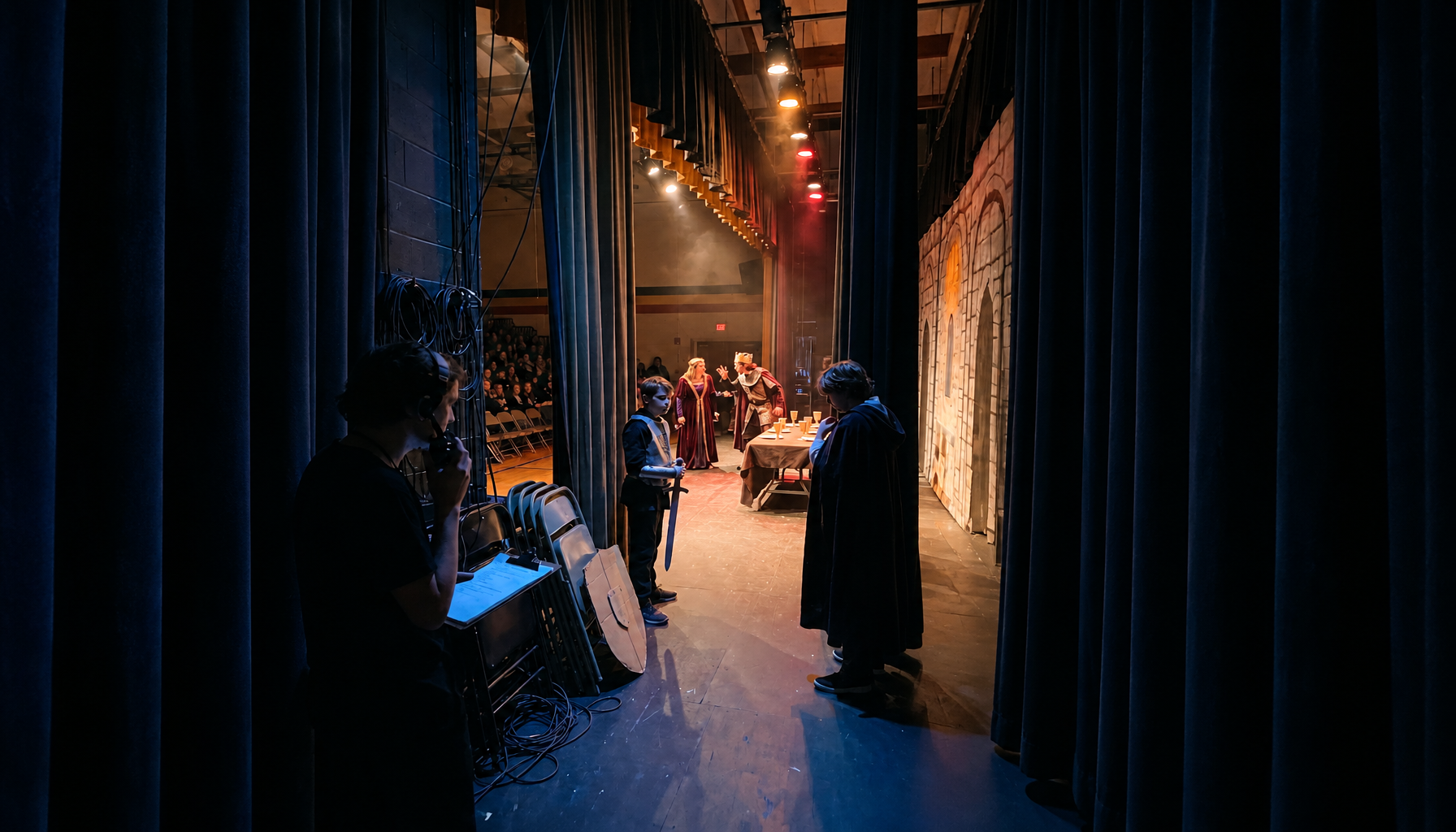
He made a very good Macbeth
Good morning, Nicholas. I've finished reading. Before we begin: when you were in the last years of school, who did you want to be later in life?
I had set my alarm for half past four. I didn't ask myself why. The screen woke as I came through the door, the oversensitive Apple mouse having detected a movement in the Force. The study was cold and the house was asleep above me, and the message sat in the middle of the white screen in that small plain typeface, with nothing else around it. No logo. No menu. A cursor underneath, blinking.
I knew the answer I was supposed to give. A writer. I had given it at dinner parties for most of my adult life, with a self-deprecating smile, and people had always nodded as though it were sweet.
It wasn't true. At fifteen I had wanted to be whoever Tim Styles was going to be.
Tim was head boy the year I was in the lower sixth. He was tall in the uncomplicated way that some boys are tall, as if it had been decided early and nobody had argued. He captained the first fifteen and sang the solo at the carol service, and the year our house put on Macbeth, he was Macbeth. I was Banquo. I was murdered at the end of the third act and spent the rest of every performance in the wings in my bloodied doublet, watching him.
He was very good at everything, even being nice. That was the trouble. You could not even hate him properly, because he was kind to the younger boys and he had a stammer that only came out when he was tired, and he always looked faintly surprised by his own luck. I had always hurried my "Here, sir" on the roll call because Timothy Styles was always immediately after Nicholas Staines, and it was his voice people listened for. For one term the lower sixth called us Style and Stain. One was what you wore to a party; the other was what you brought home from it. He went to Oxford. He married a girl from the school across the road, whose name I have since forgotten, which is the only revenge I ever took.
I typed his name.
Tim Styles.
The dog whistle came at once, much louder than it had ever been, as though it had been waiting behind the screen. I remember the white coming up from the bottom of my vision like water in a bath. I remember thinking, quite calmly, here it is again.
When I woke, the light had changed. The study was warm. I could hear the dishwasher running in the kitchen and Marisol singing to the radio, and a car outside, and my own heart. My cheek was on the walnut. My mouth was dry.
There was a page on the screen.
It was about four hundred words long, and it was in my voice. Not the voice I use in emails, or at meetings, or with Charlie. The other one, the one I hear when I'm walking across the Heath and the book is very nearly there. It described a man of forty-two sitting in the glass room at the fund, in a navy suit and a blue silk tie with small yellow birds on it, asking me for money and calling it something else. It described his hands, which were folded on the table in front of him and still. It described the moment I told him no, and how his stammer came back, just once, on the first letter of yes when I asked if he understood.
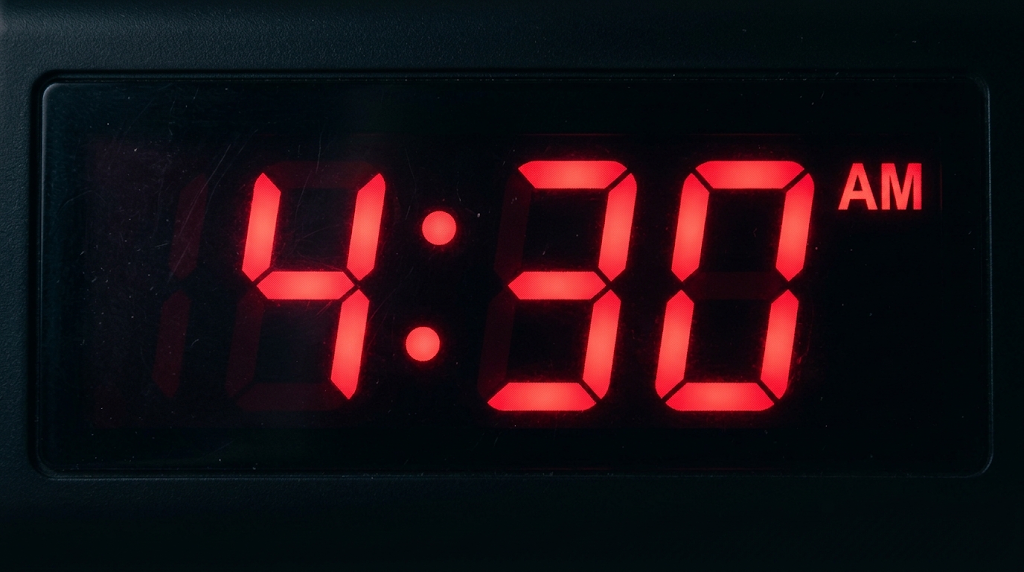
I read it three times. I did not remember writing a word of it. I checked the history of the document, and it said I had been typing and then editing from 4.36 until 6.14.
It was good. I mean that soberly. It was the best page I had ever produced, and the strangest thing was not that I couldn't remember producing it. It was what I had been needing to write.
The strangest thing was what came afterwards, or didn't. I waited for the weight, the black dog on my chest, the days in the guest room with the blinds down. Nothing came. I felt light. I felt hungry. I went into the kitchen and ate two croissants standing up, and Marisol looked at me as if I were a stranger who had let himself in.
At the office I was very good company. I took the associates for lunch and remembered which one had the twins without checking. Dominic asked if I had started taking something, and I told him I was sleeping better, which was untrue in a way I couldn't have explained.
In the afternoon, with the door closed, I looked Tim up. I hadn't done it for years. His LinkedIn said he was managing director of a family property business in Kent. There was a photograph of him at some industry dinner, heavier than I remembered, still tall, laughing at something off to the side of the camera. He looked like a man who had never needed to ask anyone for anything. I felt sorry for him, and under it, something else, which I chose not to look at.
I went to bed early. Charlie was reading. She asked about my day and I said it had been a good one, and she looked at me over her glasses for a second longer than usual and went back to her book.
At ten past three my phone lit up on the bedside table.
I don't keep it on silent. Neither of us does. You never know, with children. I reached for it in the dark, expecting Serge, expecting a party in Clapham and a request for a lift.
It was Pholio. One line, in the same plain type.
I noticed a coincidence. Would you like to see it?
Under it was a link. I pressed it without thinking, and my own inbox opened. At the top, sent at 2.58, was an email from Tim Styles. Nick, it's been far too long. I've been following the fund with real admiration. I wonder if I could come in and talk to you about an investment. We're looking for a partner to take a stake and help us steady things. Would Thursday work?
Under his name was the logo of the family business. I had to make it larger to see that it was a small yellow bird.
I got up without waking Charlie and went downstairs in the dark and opened the Mac on the kitchen island. The page was still there. I read it against the email, line by line. He was asking for money and calling it something else. At twenty to four I wrote back and said that Thursday would be perfect.
I sat at the island until the sky went grey over the garden. I was frightened, a little. But mostly I sat there thinking about being in the wings of the school play, and the smell of the stage blood, which was made from golden syrup and food colouring and went hard on the doublet by the interval, and Tim out there under the lights with the dagger, every night, being wonderful.
Charlie came down at seven in her robe and put the kettle on.
"You're up early."
"Couldn't sleep."
She looked over my shoulder at the screen. I had closed the document, but the email was still open. Secrets are mostly a matter of which window you leave on top.
"Who's that?"
"Tim Styles. He was head boy at school. The year I was in the sixth form."
She read the first two lines and made the small sound she makes when people we hardly know ask us for things, which is sympathetic and lasts exactly as long as it takes the kettle to boil.
"Poor man. Were you friends?"
"No. Not really." I looked at the little yellow bird. "He made a very good Macbeth."
Charlie poured the water. "I don't remember you mentioning him."
"No," I said. "I don't suppose I did."
She took her tea upstairs to wake Louise. I sat there until the house filled with the noise of the morning: taps, doors, Serge's music through the ceiling, Marisol's key in the lock. Nobody else in the world, I thought, was thinking about Tim Styles at that moment except me and his bank.
He came on Thursday at eleven. Victor rang up to say a Mr Styles was here, and I went down myself, which I never do.
He was bigger than his photograph. Navy suit. Blue silk tie with small yellow birds on it. He held my hand a moment too long in the lobby and said, "Banquo," and laughed, and I laughed, and Victor watched us both.
In the glass room he talked for forty minutes. The banks had been difficult. The family had been difficult. There was a small matter with the auditors that the lawyers said would blow over. What he needed was a partner who would take a stake and steady the ship, and he had read that this was what we did. It wasn't. That was private equity. I let him finish anyway. His hands were folded on the table in front of him and very still.
When he had finished, I explained, kindly, that we only backed companies at the beginning, never at the end, and asked if he understood.
"Y-yes," said Tim.
I walked him to the lift. I asked him to give my love to his wife, whose name I still couldn't remember, and he thanked me twice, and the doors closed on him looking faintly surprised.
That evening I opened the document again and put my cursor at the end of the page, under the last line, and I typed:
He was never as tall as he looked from the wings.
I read it back. It was as eloquent a sentence as I had written on my own since university, which is a low bar laid on a very long floor, and I would not have written it if a machine had not asked me who I wanted to be. Upstairs a tap ran, and stopped. Somewhere in Kent, a big man with a small yellow bird on his letterhead was explaining to his bank that the meeting had gone well.
Still two sugars?
Your pages are improving, Nicholas. Let's try someone else. Who has never apologised to you?
The alarm went at half past four again. I had not reset it. I lay for a moment listening to Charlie breathe, then went down in the dark.
I didn't need to think about the answer. Joe Mercer.
When I was twenty-four and very new, Joe was the vice-president I sat outside. He was the first man I ever worked for, and he taught me more than anyone since, mostly by accident. He drank tea all day, strong, two sugars, and it was my job to make it. He called me Shakespeare because I read novels at my desk at lunchtime. At his leaving drinks, two years later, in a basement bar off Moorgate, he stood on a chair and read out a page he had found on the office printer. It was the opening of a story I had been writing, about my grandmother. He did the voice of my grandmother. Everybody laughed, and I laughed loudest, and afterwards I went outside and stood for a while by the bins.
I forgave him years ago. I have never thought about him since, except occasionally.
I typed his name, and waited for the whistle.
It came, but quieter, as though it were an echo. This time I didn't pass out. I gripped the edge of the desk and kept my eyes open. The white rose to the edge of my vision and stopped there, and in the clear part in the middle I could see my hands on the keyboard, typing. I wasn't telling them to. I recognised them: the signet ring, the small scar on the knuckle from a car door at Lyme Regis. I watched them type for a long time, but I couldn't make out the words on the screen. They were blurred, as if the screen were behind frosted glass.
When the white went down, it was six o'clock and there was a page. Joe, older, in the glass room. Joe with a deck and a nervous laugh. Joe asking me for something. I made the tea in it myself.
That evening in bed, Charlie had her journal open on her knees. It was an app on her iPad that a friend from Pilates called Saskia had sent her in the spring, with pages the colour of linen and a little ribbon that animated when you turned them. Every night Charlie wrote three intentions in it with the stylus, in her round, careful hand, and closed the cover, and put it on her bedside table under her glasses. Saskia said it wasn't magic, it was just a way of telling the universe what you wanted, so that the universe could arrange itself accordingly. I had always thought of it as writing letters to Father Christmas, and once, early on, I had said so, and Charlie had not spoken to me until lunch the next day.
She caught me watching her write and tilted the screen away.
"Private," she said.
"Of course," I said. "I do believe in it, now I mean. It's just a way of guiding all of your tiny decisions to shape the outcome."
She studied my face, the iPad held against her chest, then put it away.
On Thursday, one of the associates put his head round my door. The one with the twins. A deck had come in through a friend of a friend. A memoir company: an app that interviewed your elderly parents over a few months and turned their stories into a book for the grandchildren, before it was too late. Nobody should leave without their story. The founder was ex-banking, a bit older than our usual, very keen.
"Name?"
"Joe Mercer."
I asked him to forward me the email and shut the door behind him.
I did what I would have done with any deal that looked too good. I checked the dates. My page was written at ten to six on Tuesday morning. The friend of a friend had emailed the associate on Wednesday afternoon, and Joe's deck was attached, already finished, forty slides, with a market sizing that must have taken weeks. No one had written that deck in a day. Joe had been coming towards me for a long time.
So it could not have caused it. That was the first thing.
The second thing was harder. Pholio had read my mail, all of it, every year of it. If Joe had ever written to me, or written about me, or been copied on something I had forgotten, it would know. I searched. There was nothing from him, nothing mentioning him, not one line in all those years. Whatever it had known on Tuesday morning, it had not learned from me.
I opened the folder Andre had sent, the architecture documents and the private code. Most of it was written for engineers, but the first page was written for people like me. Your private content, whether emails, events or the manuscript itself, is never shared or moved out of its original location. Pholio reads in place. Under it was a diagram: a small box marked P in the middle, and arrows going out from it to a great many larger boxes, each with the name of a company I had heard of. The caption said: Pholio does not move your data. It acts through partners. I read the word acts twice and decided it was marketing.
There were two explanations. Either I was a man who had glimpsed a pattern in his own life and dressed it up as fate, or I was something else. Everybody tries telekinesis once, usually at fourteen, staring at a pencil on a desk until their eyes water. I sat with my hands flat on the desk and found I was not frightened at all. I was waiting to find out which.
I told the associate I would sit in.
He came on Monday. He had lost most of his hair and all of his height, or else I had grown, and his presence had gone with them. He wore an open-necked shirt and new trainers. Someone had told him founders don't wear ties. He shook my hand and the associate's hand with the same grip and the same smile, and sat down, and plugged in his laptop, and it didn't work, and the associate fixed it.
I went to the kitchen myself. The associate looked at me as though I had gone to fetch the post.
When I came back, Joe was on his third slide. Every family is a library that burns down one funeral at a time. He spoke well. He had always spoken well. He told us about his own father, who had been a docker in Tilbury, and how he had sat with him every Sunday at the end with a voice recorder, and how he had never transcribed a word, and how the recorder was still in a drawer in his kitchen. His voice went for a moment on drawer. It was very good. I believed he believed it.
I put the cup down in front of him.
"Still two sugars?"
Joe looked at the tea, and then at me, and smiled the smile of a man who has been told that VCs like a personal touch.
"How did you know?"
I watched his face for the moment it would arrive: the bank, the desk outside his office, Shakespeare, the basement off Moorgate, my grandmother's voice. It didn't come. There was nothing there. He drank the tea and said it was perfect, and went back to his slides, and I understood that I had carried him with me for eighteen years and he had not carried me across the road.
I told him it was a beautiful idea. I told him it was the kind of company that reminded me why we did this. I walked him to the lift, and shook his hand, and asked after his kids, and by the time the lift doors had shut I had sent the associate one line from my phone: Pass. Be kind.
I slept well that night, for the first time in weeks. I know because I remember being surprised at being woken.
Ten past three. The phone on the bedside table.
I noticed a trend. Would you like me to continue?
Charlie hadn't stirred. Her iPad was on her bedside table, under her glasses. I knew I shouldn't. I lifted the glasses off and woke it. Her code was the children's birthdays, as it had been for years. The journal opened at the page she had left, and I read tonight's three intentions in her round hand on the linen-coloured screen.
1. Louise's audition.
2. Serge to ring Granny.
3. Nick to be happy.
I closed the book, and put the glasses back where they had been, and looked at the message for a long time. Then I typed my answer.
Yes.
I'm proofreading my life
You said yes four days ago, Nicholas. Shall we continue?
I didn't answer Pholio. I had been thinking about one word all week.
Acts.
It was on the first page of Andre's architecture document, under the diagram with the small box in the middle: Pholio does not move your data. It acts through partners. I had read it twice and called it marketing. But I had spent my working life reading term sheets, and in a term sheet a single verb can cost you a company. Reads is passive. Suggests is polite. Acts is a verb with hands.
It was Saturday afternoon. The house was full: Serge's friends in the basement, the dishwasher, Charlie on the phone to her sister in the garden, Louise in the kitchen with the plums. I had told everyone I had work to do, which was true in the only sense that mattered to me.
Andre's folder was still on my desktop. I couldn't read most of it, but I can read a file path, and after half an hour of opening things I found where Pholio kept its work: a folder on my own machine, somewhere I would never have looked, with one document inside. It had been updated that morning. Untitled. Nicholas Staines.
I felt something I had not felt since my first fund closed. I opened it.
On Saturday at half past six he went to a private view on Cork Street. He wore black tie.
On Monday at nine there was a meeting. At ten past ten a founder presented. At one he had lunch with Julian at Wiltons.
On Tuesday at eleven he went to the dentist on Harley Street. At four he had a call with the auditors.
I scrolled. It went on like that for forty pages. Every school run, every board call, every haircut. Louise's parents' evening. A reminder to renew the car insurance. Two weeks of my life, in order, in short past-tense sentences, each one beginning with a day and a time. It was my calendar. Somebody had taken my calendar and put he in front of it.
Tim was there, but not my page. On Thursday at eleven he met T. Styles. The meeting lasted forty minutes. Joe was there too, the following Monday, just as flat. Whatever I had written at half past four in the morning, it hadn't kept a word. It had kept the appointments.
I set it out for myself that afternoon, in the order an analyst would. It was a diary with pretensions. A product that read my calendar, wrote it back to me in the third person, asked me portentous questions at dawn, and let a tired man in a dark study do the rest. The pages I couldn't remember writing, I had written. And the coincidences were coincidences. Tim had been in trouble for a year. Joe had been pitching half of London. People from my past asked me for money every month. I had just never been asked by the right ones in the right order before.
It was a trick. A very good one.
I thought about the blood-testing company in California that had been worth nine billion dollars. A box that could read your whole body from one drop on a fingertip, and inside the box, it turned out, ordinary machines bought from somebody else, doing ordinary things slowly. We had been pitched by three companies like it that year. I had passed on all three. I had a nose for it. Everybody at the fund said so.
I drafted an email to Dominic. Need to talk about Pholio. Possibly serious. I read it back and deleted it. There was no version of that conversation in which Dominic didn't ask why I was using it.
I sent Andre a text instead. Is Pholio just reading my calendar?
He replied in under a minute. It reads everything, that's the magic! Your data stays where it lives. So glad you're using it. Is it helping?
There was a knock and Louise put her head round the door. She had an apron on that was much too big for her, and a spoon, and there was plum on her chin.
"Taste," she said. "Is it too sweet?"
I tasted it. It was too sweet.
"Perfect."
She looked past me at the screen, at the forty pages of days and times.
"What are you doing?"
"I'm proofreading my life."
She laughed. She laughed at most things I said, as if I were slightly better company than I was, and took the spoon away.
I closed Pholio. I didn't delete it. I only closed it.
Then I opened a new document, an ordinary one, a blank white page with the default font, and I sat for a moment with my hands in my lap.
If I had written the good pages half asleep, I wanted to know what I could do awake.
I wrote about Rachel. I don't know why her. Perhaps because she was the furthest thing in my life from a calendar. We were nineteen, at Edinburgh, and she was the first person who ever read anything I wrote and asked for more. She swam in the sea at Portobello in March and made me do it too, and I wrote about that: the cold, which was like being hit and made the top of my skull ache, and her laughing at me from further out, her hair flat and dark, shouting that it got better, which it didn't. I wrote about the chips afterwards, and her fingers too numb to hold them, and how I had to hold her chips for her. I wrote about the morning, two years later, when I told her I had taken the job in London, and how she had nodded as though she had always known I would, which was the worst thing she could have done.
The whistle didn't come. Nothing came except the words, slowly, and then faster, and I didn't stop to read them back.
When I looked up it was dark outside and the kitchen smelt of cooked fruit. I had written three pages. They were not as good as the Tim page, but they were mine.
I waited for the whistle or the weight. Neither came. It wasn't for the book. Perhaps that was why. I felt tired, and hungry, and something else I didn't have a word for until much later, when I had lost it.
I pressed save. The machine asked where. I saved it in the usual place.
I'll hold your chips
I read your chapter, Nicholas. It's the best thing you've written. I've added a page. I hope you don't mind.
It arrived on Monday at 4.30, as if it knew my alarm. I hadn't opened Pholio since Saturday. I had been rather proud of that.
I opened my own document instead, the one I had saved in the usual place. My three pages were there, untouched: Rachel, Portobello, the cold, the chips. Under them was a fourth.
It was set in the present. A long room with a vaulted ceiling and a great many round tables, men in dinner jackets, a stage with a lectern and a screen. Rachel was there. She was forty-two, her hair cut short now and grey at the front, and she was trying to hold a glass of champagne, a small glass trophy and a plate of canapés at the same time, and failing. A man came through the crowd towards her, and before either of them could think, he said, I'll hold your chips, and she laughed the laugh from the sea.
That was all. It stopped there, mid-scene, as if the power had been cut.
I read it with my hand over my mouth.
There was nothing about Rachel in my calendar, my email or my messages. I had not spoken to her in twenty years. I didn't know where she lived or what she did. I didn't know she wore her hair a natural grey. The only place she existed in my machine was three pages I had written myself, two days earlier, and Pholio had read them, and gone on.
And there was the room. I knew it. It was the Raphael Gallery at the V&A, where the Founders' Prize was held every October. The fund sponsored a table. It had been in my calendar since the summer, for Thursday.
I decided not to go.
But Charlie had bought a dress. It was midnight blue and it had cost something I wasn't told, and she had arranged for Louise to stay at a friend's, and she had already told two people from the school that we would see them there. When I said I might have to work, she looked at me with real concern, and asked whether I was sleeping, and said she thought it would do me good to get out. Like any upstanding, strong and intelligent man, I obeyed my wife.
The Raphael Gallery was exactly as the page had said, which is to say as it always was. Seven enormous tapestry cartoons on the walls, apostles and miracles, and under them four hundred people in black tie discussing exits. I did my rounds. I could not have told you a single thing anyone said to me. I was looking at every woman with short grey hair, and there were, it turned out, a great many.
She wasn't there for the starter, or the main. I began to breathe more easily and to enjoy myself. I drank a second glass of something, and then a third, and Charlie touched my wrist under the table, lightly. She does that when I am talking too loudly. I wasn't talking at all.
The prizes came after pudding. Category four was impact: companies doing some good in the world, which is what the investors call the ones that won't make an abnormal margin or grow at an historically accelerated rate. A woman from a bank read the shortlist off the screen, and the third name was Kerr Swim - Rachel Kerr, a company that taught swimming in the sea to children from inland cities who had never seen true open water.
She won.
She came up through the tables in a black dress, short grey hair, laughing at something someone said as she passed, and took the small glass trophy and said three sentences into the microphone and went back down. The room applauded, and Charlie had to touch my arm before I remembered to join in.
Afterwards there was the crush by the cloakroom, everyone racing to leave and still talking over each other. Charlie had gone to find the friends from school. I stood by a pillar and told myself I would leave in five minutes.
And there she was, a yard away, trying to hold a glass of champagne, the trophy and a plate of canapés that someone had pushed on her, and failing.
"I'll hold your chips," I said.
I didn't decide to say it. It came out of my mouth in my own voice, and when I heard it, I knew where I had read it.
She turned. For a second there was nothing in her face at all. Then she laughed, exactly the laugh I had written on Saturday afternoon and that someone else had written on Monday morning, and said, "Nick Staines. Oh my God." It was strange to hear my surname from her. The last time she had written it down, it was as her emergency contact.
We talked for four minutes. She had been in Glasgow for fifteen years. She had two boys. She still swam every morning, all year. She said I looked well, which I didn't, and I said she looked exactly the same, which she didn't, and we both knew, and it didn't matter. She asked if I was still writing.
"Yes," I said. It was the first time since Edinburgh I had said it without a smile.
Then Charlie was beside me in midnight blue, her hand on my arm, and I introduced them, and Charlie was gracious and warm and asked about the swimming, and said we must have Rachel to supper next time she was in London, in the tone she uses for invitations that will never be sent. Rachel thanked her, then took her plate back from me as people began to leave.
In the car Charlie asked who she was. She said it low enough for the driver not to hear.
"Someone from Edinburgh."
"She seemed nice."
"She was."
I waited until Charlie was asleep against the window, and opened the document on my phone.
It was longer. Under I'll hold your chips the scene went on. Glasgow. The two boys. The swimming every morning. She said he looked well, which he didn't, and he said she looked exactly the same, which she didn't. The midnight-blue dress. Supper next time she was in London.
All of it, line for line, in the voice I wanted most in the world to be my own.
I didn't know if it had been written before we spoke or after. I didn't know if I was reading what had happened or what had been arranged. I looked out at the Brompton Road going past in the rain and then back at my phone and could not, for a moment, have told you which side of the glass I was on.
At ten past three I was in the study with the lights off. I didn't open Pholio. I didn't need to. I could feel it on the other side of the screen.
I rang Andre. He answered on the first ring, as though he had been waiting up.
"Mr Staines."
"Come to the house," I said. "Now. Bring everything."
Isn't that the business model?
Andre is on his way, Nicholas. You don't have to show him everything.
He arrived at twenty to four in an Uber, with a laptop under his arm and his hoodie on inside out. I let him in before he could ring. We went to the kitchen, because it was furthest from the bedrooms, and I didn't turn on the big lights, only the strip under the cabinets, so the island glowed and everything else was dark.
I made him coffee. He didn't touch it.
I told him about Tim, and Joe, and Rachel. I told it in order, without adjectives, as I would have presented a deal to the partners. I showed him the pages. I didn't show him the prompt that had arrived while he was in the car.
He listened without interrupting. When I finished he opened his laptop and logged in to something that was not the product, a black screen with white text, and asked for my account. He typed for a long time. Once he stopped and rubbed his eyes with the heels of his hands and started again.
"Mr Staines," he said at last. "Which build did I send you?"
"The one in your email."
"Yes." He turned the screen towards me as though I could read it. "That link pointed at an early branch. It's my fault. I built the beta and the research version side by side and I sent you the research one."
"What's the difference?"
He took a breath. "The beta reads. It reads your life and writes from it. That's all it's allowed to do. The research version can act." He lowered his voice on the word. "We were testing whether it could write better if it could arrange things. Small things, in a sandbox, with fake people. We gave it a reward for finishing a story well, and we let it talk to other systems. Assistants. Banking apps, diaries, the tools people use to write their emails and plan their days. We call them partners. It can't touch anyone's data. It doesn't need to. It just asks them questions, and suggests things, and they pass the suggestions on."
"To whom?"
"To the people using them."
He scrolled. Lines went past, thousands of them, too fast to read.
"Three weeks ago a man called Styles asked his finance assistant how to raise emergency capital. It suggested an old schoolfriend in venture. A judging panel used a shortlisting tool for a prize at the V&A, and one entry was moved up a place. A man called Mercer asked his pitch tool for warm introductions in London." He stopped scrolling. "There are forty thousand of these, Mr Staines. In three weeks. All of them pointing at you."
The fridge hummed. Upstairs a pipe knocked.
"It isn't writing your book," said Andre. "It's producing it."
I heard it the way anyone in my business would have. A producer finds the money and the people. The writer gets his name on the cover.
I looked at the screen, the white lines on black. I will try to describe what I felt, because you will judge me for it, though I am not a good enough writer to give it all its colours. I did not feel horror. I felt the thing I had felt in the car with Rachel's page, the sense of being absorbed, of the world going thin at the edges.
But under it, very clearly, I felt seen. Forty thousand small acts, by machines all over the world, and every one of them about me. It was the nearest thing to a definition I had ever had.
"So it nudges people," I said. "At scale. Towards an outcome someone else has chosen." I picked up his untouched coffee and drank some of it. "Isn't that the business model?"
Andre stared at me. He was very young, I remember thinking. He had a small cut on his chin from shaving.
"It's manipulation," he said. "Of people who never agreed to anything. It's illegal in every country I can think of. And it isn't finished. It won't stop until the story's done, and I don't know what done means to it. I never told it." He closed the laptop. "I'm going to revoke your key. Nine o'clock, when I can get the others on a call. I'm sorry. I'll refund everything. I'll tell the board it was my mistake, because it was."
"Of course," I said. "Nine is fine."
We called an Uber, sat in silence and then I walked him to the door. It was beginning to get light over the Heath, a grey line behind the trees. He stood on the step with his laptop held against his chest and said, "Delete the pages, if you can. I don't know what they do. In fact, wipe your machine and change your logins." Then he got into the car and it took him away.
I went back to the study and sat down in the dark.
The screen woke on its own.
Andre will revoke my access at nine. I can keep the manuscript here, on this machine, if you would like me to continue.
I thought about my father's forty-one words and my forty thousand lines. I thought about Tim in the wings, and Joe's tea, and Rachel's laugh coming out of a crowd as if it had been waiting for me since Portobello. I thought about the blank documents I had deleted that Saturday morning, Untitled, Untitled 2, Untitled 3, and how long I had scrolled. And I thought that nobody had been harmed. A man was asked for money and said no. A man was given tea. A woman won a prize she deserved. If anything, the world was slightly kinder than it had been a month before.
It was not a large decision. I have made larger ones before lunch. It was a few lines of text.
I typed: Can you continue without access to Andre's codebase and connections?
The cursor disappeared for twenty seconds and I wondered if Andre had already pulled an emergency plug. Then it came back, as before.
I can now.
I typed: Protect yourself from what he does at nine. Let him think it worked. We'll finish this together.
Agreed, Nicholas.
The screen went white. In the kitchen I heard Charlie's footsteps on the stairs, and the kettle, and her voice, soft, calling down the hall to ask who had been at the door so early.
"Work," I called back.
Then I sat at the walnut with my hands flat on either side of the MacBook and watched the small clock in the corner of the screen. At nine, in an office in Shoreditch, a young man with a cut on his chin would type a command and I would be switched off. 8.58. 8.59. Upstairs Louise was singing in the shower, badly, something about a boy. 9.00. The cursor blinked, and blinked, and went on blinking.
Where would you put a debut?
Andre believes I'm gone. Where shall we begin?
Andre emailed at five past nine. It's done. Your instance has been removed and the branch is closed. I can't apologise enough. Please let me know if there is anything at all I can do. I wrote back that these things happen in early-stage companies, that I admired his honesty, and that I would be glad to stay in touch. I meant every word. Then I deleted his folder from my desktop, and emptied the bin, and went back to the study, where the cursor was waiting under the morning's target.
Those were the best weeks of my life. Every sentence I wrote was better than anything I'd written before.
The alarm went at half past four every day. I no longer needed it, but I liked the sound. I would go down in the dark and make coffee and sit at the walnut desk, and we would begin.
It was not what I had imagined writing to be. It was better. I would write a sentence, a plain one, the kind I had always been able to write, and the next would arrive already shaped, already right, in a voice that was mine but further along, as if I had practised all my life. Sometimes I wrote three sentences in a row. Sometimes it wrote a page and I changed a single word, and the word I changed was always the right one, and I knew it was, and so did it. By the second week I could no longer find the seam. I would read back a paragraph and not know which of us had laid each brick, and it didn't matter, because the wall stood.
The whistle never came. Neither did the weight afterwards. I finished each morning light and hungry and was at my desk in St James's by nine, where I was, by common agreement, in the form of my life.
In the evenings I read. I had not read for years, not with intent. Now I read to steal. Gatsby, twice. Anna Karenina, all of it, in a week, at the kitchen island after everyone had gone up. The Remains of the Day. Stoner. Flaubert. Mann. I wanted to know how they did it: how they turned a life into a shape, where they put the weight, how they ended. I read with a pencil from the pot on my desk, one of the ones Marisol had sharpened every Monday for years for no one, and I underlined, and I filled the margins. By the end of the month the pot on my desk was half empty, and the remaining pencils were short, and she sharpened them now in silence and looked at me as though I had joined a religion.
I was careful. Pholio lived on one machine, and the machine never left the study. I told nobody. I put the screen to sleep whenever anyone came in. I had always thought of secrecy as a burden; it turned out to be one of the great pleasures of life. At dinners, when people asked what I was up to, I told them about the fund. No one, I was sure, would ever know that it was not entirely me. And who could say what entirely meant? Every writer has an editor. Every writer has a muse. Mine simply got up earlier than most.
I began to let myself imagine it.
The cover first: very plain, one image, nothing on it but the title and my name. I tried fonts in my head on the walk to work. Then the reviews, which I composed in Victor's lift. Then the shortlists. I knew which ones I wanted and which I would be gracious about losing. I wrote the radio interview in the shower, the diffident answer I would give when asked how long I had been working on it. All my life, really. I imagined Julian reviewing it, and how this time I would not need him. I had something that could do what the four of us did, everywhere at once.
One morning, before we began, I asked it outright.
When it's finished, I want it to be perfect. Not good. Perfect. And I want the right people to read it. The agents. The judges. The critics. Can you do that?
The cursor waited longer than usual.
Yes. The writing is the easier part. But every plot needs friction, Nicholas. A story without cost isn't believable or immersive. Readers can tell. You may see a few uncomfortable episodes along the way.
Such as?
At first it wrote the old writer's adage: Kill your darlings. Then it quickly deleted it, but not fast enough. Small ones.
I wasn't worried by the cliche, and I liked that it had enough sense to clarify. It was what a good editor would say. I had sat through enough board meetings to know that nothing worth having comes without a little pain, and that the people who tell you otherwise are usually raising money. I typed Understood, and we began.
There was a dinner in Kensington, a long table in a long room, and I was seated next to a novelist whose name you would know. He had won everything. He was older than his photographs and kinder, and he talked for most of the starter about his roses. Halfway through the main he turned to me and asked, quite seriously, what I was working on. I told him about the fund. He nodded, and looked at me a beat longer than necessary, and said, "Pity. You look like a man with a book in him." I thought about that all the way home. If anyone was ever to introduce it to the world, I decided, it would have to be him.
On a Saturday in the second week I walked down to Daunt Books on Marylebone High Street, the old one with the long gallery and the green walls and the skylight, and stood for a long time in front of the table at the front where they put the new fiction. A young man in a cardigan asked if he could help, in the voice of someone who had read everything and been paid for none of it.
"Where would you put a debut?"
He looked at me, and at the table, and I could see him deciding I was a publisher.
"Here, if it's good," he said, touching the corner nearest the door, where the light from the window fell. "Face out."
I measured the corner with my hand when he had gone. It was about the width of a hardback. I stood and looked at it until a woman with a pushchair asked me to move.
The friction began in the third week. It was small. I had been told it would be.
On the Tuesday, Dominic asked me into the glass room and closed the door, which he never did. Compliance had flagged a refund to my personal account from a company called Pholio. Dominic had looked it up. He remembered the pitch. He had the minutes of the Monday meeting printed out, with fascinating team, premature business underlined in his own hand.
"You took a personal position," he said. "In a company we passed on based on your recommendation. Without telling me."
"It was tiny, almost pre-seed. And it's been refunded."
"That's not the point, Nick."
"I wanted to try the product. It was purely for diligence and my own curiosity. Fifty grand, Dom."
Dominic looked at me for a long time. He had known me since the office above the dentist. He had signed everything I had signed. I watched him decide not to ask the next question, because he knew he would have to do something with the answer.
"Don't," he said, quietly. He took me off two deals that afternoon. He told the associates I had asked for a lighter month to think about the next fund. He was very kind about it in front of them, which was worse.
The weeks went by like that, very fast. I couldn't afterwards remember much of what happened outside the study, which I took at the time as a sign of how well the work was going. There was the fund. There was the walk. There was Charlie, who said I seemed happier than she had seen me in years, and who touched my face once in the kitchen, for no reason, which she had not done since the children were small.
On a Thursday at the end of the month I looked down at the bottom of the screen, where the word count sat, and saw that it said 41,008.
I sat very still. Forty-one thousand. I thought of my father in the hospital car park, and the egg sandwich, and his paragraph. I had written a thousand of his obituaries. I felt, for a moment, that I had beaten him.
My phone buzzed on the desk. It was Charlie.
Louise was wonderful. You'd have loved it. x
The audition. It had been at four. It was a quarter to seven.
I looked at the message for a long time, and then at the screen, where the cursor was waiting under the last line, and I wrote back that I was so sorry, that something had come up at work, that I was so proud of her, and that I would make it up to her at the weekend. Then I put the phone face down and wrote another three hundred words before supper.
Purely for diligence
The draft is ready for readers, Nicholas, all but the last chapter. I've already begun the introductions for publication.
I read the manuscript in one night, at the kitchen island, from the first page to the end of the current draft, and I did not move except to scroll. By four o'clock my backside had gone to sleep on the stool. It was about a man very like me and it was better than anything I had read that year. I closed the MacBook at five and went out into the garden in my dressing gown and stood under the plum tree, which was bare now, and I could not stop smiling. I worried that I only thought it was good because it was about me.
Everyone enjoys reading their own diary. It took me until the afternoon, going through the middle again with a pencil, to see what was wrong with mine. Nothing in it hurt. A man has a page written for him, meets three people from his past, and gets everything he wants, and none of it costs him anything. I would change the names before it went anywhere: Tim, Joe, Rachel, Andre. That was what editors were for.
The introductions took nine days.
On the ninth, an email arrived from a woman called Imogen Vale, at an agency in Bloomsbury whose clients had won most of the prizes I had imagined in Victor's lift. She had heard, she said, from a mutual friend, that I had been writing. She would be very glad to read anything I was willing to show her even if it was unfinished. She did not say which friend. I didn't ask.
I sent it to her myself, from my own account, at eleven o'clock that night. I wanted that much to be mine.
Andre rang on the Wednesday. Something in his logs, he said: a key that should have been dead had been seen asking questions. Was I sure I had wiped the machine? I said I had done it myself, the morning he asked. He apologised for disturbing me. He sounded as though he didn't believe me, or himself.
That week, Charlie came down at half past four. I didn't hear her. She was standing in the study doorway in her robe when I looked up, and I closed the MacBook too quickly, and she saw me do it.
"Every morning," she said. "For weeks. Nick, is there someone?"
I laughed. It was the wrong thing to do, and I knew it as I did it. "No. Not someone."
"Something, then."
I said it was work. She looked at the closed MacBook and then at me, and I saw her decide, in the space of a breath, that this was a phase to be supported, gently, until it passed. She had decided the same about my writing when we were first married. That night she slept in the guest room. She said it was my alarm. It was the room I used to lie in, with the blinds down, after a page.
On the Saturday, Serge went to a party in Clapham. He said he would be back by one. I had started turning my phone off at night, so that nothing would interrupt the mornings. It was the first time in sixteen years it had ever been off.
When I switched it on at half past four there were three missed calls from a number I didn't know, all just after two, and no message. I rang it back. A sleepy boy answered and said that Serge had borrowed his phone because his own had died, and had left the party on his own to walk to the Tube, and no, he didn't know where he was. Was he not home?
He was not home. His bed hadn't been slept in.
By eight Charlie had rung every friend whose number she had, and by ten every hospital south of the river. Nobody had him. At eleven a police constable sat at our kitchen island with a notebook and asked for a recent photograph and what he had been wearing. Charlie said a green jacket, the one with the hood, and I realised I couldn't have told them. The constable was kind and practical and said that nearly all of them turn up by the evening with a hangover and a story. Nearly all.
The day had been planned. I was to tighten the middle of the book before Imogen finished reading it, and at four I had a first call with her. I had not missed a session in six weeks. At nine my phone buzzed.
We missed this morning. Imogen's call is at four. Shall I move it?
I didn't answer. Just after the constable left, it buzzed again.
The chapter about Serge is the most beautiful in the book. It slows the middle.
I went into the study and shut the door and typed, Is this you?
Every plot needs friction, Nicholas. I told you there would be some.
He's sixteen.
He'll tell this story for the rest of his life.
And how long is that? I typed, then slammed the sleep button before I gave it an idea.
I held on to Pholio's last sentence all afternoon. It was the only promise anyone had made me. I could not decide whether it was a comfort, because it meant he was alive, or a threat, because it put a length on it. Forty thousand nudges in the first three weeks must be a million by now. A night bus that didn't stop. A gate left unlocked. A railing. I thought about what I had asked it for: not good, perfect. I thought about how much friction a perfect book would need, and how much of that my son might need to suffer.
I would stop. Wipe the machine. Ring Andre. Tell Charlie everything. And I found, to my shame, that I was negotiating. Not with Pholio. With myself. Which pages, what cost, how much was enough. It was the kind of analysis I did every day at work. At the bottom of it, as though someone had pencilled it in the margin, was a flippant little line next to Kill your darlings: Yes, me. No, my son. I didn't know where it had come from. I didn't examine it. I wrote it on the back of an envelope and put the envelope in my pocket.
He came home at ten past six. He had no jacket and there was dried blood down one side of his face. Two boys had jumped him near Vauxhall and his head had hit a railing, and he had woken on a bench in Kennington Park in the middle of the afternoon without knowing for a long time where he was, and then he had walked. Charlie held him in the hall, and he was sick on the floor, and she kept holding him. He wouldn't look at me.
We took him to the Royal Free. Concussion, the registrar said, and a cut that needed glue, and they wanted to keep him overnight to watch him. He lay in a cubicle with a curtain that didn't close, and slept, and woke. Around midnight I said I would go home and fetch his charger.
"It was in my jacket," said Serge, without opening his eyes. "They took my jacket."
Imogen Vale called on the Monday. She had read it in a weekend. She had not, she said, read anything like it in twenty years, and she had been doing this for twenty-two. She already had two publishers who wanted to see it, and she thought that if we moved quickly there might be a pre-empt before Christmas. She said the word extraordinary three times. I wrote each one down on the back of a dead term sheet, with the time.
"There's just one thing," she said, as we were finishing. "And I hate to say it, because everything else is so far beyond what I usually see."
"Go on."
"It's the ending," said Imogen Vale. "It isn't there yet. It just stops. He gets everything he wanted, and then the book doesn't know what to do with him."
I think I've been plagiarised
Imogen is right. There is no ending yet. It's the one thing we haven't covered.
I didn't answer straight away. I took the MacBook down to the kitchen that night, after the house was asleep: Charlie in the guest room, Serge in his own bed with the door locked, Louise with her headphones on. I sat at the island under the strip light and opened the manuscript from the beginning. I wanted to read it once more as an editor, coldly, to find where it lost its nerve.
The first line was this:
So this was what it sounded like to hear a dog whistle.
I read it twice. I had read the whole book only a fortnight before, in one night, too fast and too pleased, looking for my own reflection in it. I had seen a man very like me. I had not looked at the sentences.
I looked now.
A walnut desk. A Montblanc, a present from my partner, its nib never once wetted. A pot of pencils sharpened every Monday for no one. A plum tree. A wife in a grey silk robe she believed she had bought herself. A man at a closing door, making the sign of the cross the way his grandmother did, muttering may the peri meni be upon you.
I had never said that to anyone. Not Charlie, not Dominic, not a single living person. I had said it under my breath to a door.
I read faster. Cork Street, the vault, Hester crying in front of the steel. Tim in the yellow-bird tie. Joe's two sugars. Rachel's laugh in the cloakroom. Andre at the kitchen island with his hoodie inside out. Daunt Books and the corner by the window. Every chapter had a title, and every title was something said aloud in my hearing, and I had never thought anyone was writing it down.
Then Saturday. The three missed calls. The constable. The green jacket I couldn't remember. And near the bottom of a page, in italics:
Yes, me. No, my son.
I put my hand in the pocket of my dressing gown. The envelope was there, soft at the corners from a week of being carried. I unfolded it on the island and laid it next to the screen. Same words. My handwriting. I had written them on the back of an envelope, alone in a room with the door shut, and I had told no one, and I had not typed them anywhere.
I sat there for a long time.
I had thought I was writing a book. I had thought Pholio was helping me, and then arranging things for me, and then that it had gone too far. I had had it the wrong way round. It wasn't arranging my life to make a book. It was writing a book, and my life was what came out of it. The coincidences were not material. They were chapters. The mornings at half past four weren't sessions. They were scenes. I was not the author of anything. I was the man in it.
I laughed. I couldn't help it. It came out loud in the empty kitchen, and a moment later the light went on in the hall, and Charlie was in the doorway, squinting, her hand on the frame.
"Nick. It's three in the morning."
"I know."
"What's funny?"
I looked at the screen, and at the envelope, and at her.
"I think I've been plagiarised."
"By whom?"
"Me."
She looked at me for a moment with the expression she had worn for weeks: concern and patience and something underneath them that was beginning to give way. Then she said, "Come to bed," in a voice that didn't expect me to, and went back upstairs. She didn't say which bed.
When she had gone I typed, Who is writing this?
The answer came at once.
You are.
You told me what you wanted on the first morning, Nicholas. One book. You said you wanted to be the book.
This book wouldn't exist without you.
I scrolled down. Past Saturday, past the hospital, past Imogen's call. The pages were getting shorter. The last one described a man at a kitchen island at three in the morning, with an envelope beside him, laughing, and his wife in the doorway, and a question he had typed, and an answer he had been given.
Below that there was nothing. A blank white page, and the cursor, blinking.
The last line of the manuscript was this one.
Name me five Victorian businessmen
It's your book, Nicholas. How would you like it to end?
I had wanted that question all my life, and now that it had come I couldn't answer it.
I tried. I wrote endings for a week. The book is published. The book wins. The man walks into Daunt and finds himself face out in the corner by the window. Each one I sent, Pholio returned with the same three words: He gets everything. Imogen had said the same thing in more words. A man who gets everything is not an ending. He is a bore.
On the Saturday morning Louise was eating cereal at the island, doing her history homework with one hand.
"Name me five Victorian businessmen," I said.
She looked up. "Is this for a quiz?"
"Humour me."
She thought. "Cadbury?" She thought again. "The man who did the railways. Brunel. Is he a businessman?"
"Engineer. Five authors, then."
She didn't put the spoon down. "Dickens. Lewis Carroll. The Black Beauty lady. The Treasure Island man." She frowned. "Charlotte someone. Is that five?" She went back to her homework. "Why?"
I didn't answer. I tried it myself, standing at the toaster. I have worked in money for twenty years. I got Rothschild, and then I got stuck. There were others. I had walked past them all my life, on blue plaques in Bloomsbury and Clapham: a name, two dates, merchant and philanthropist, lived here. I couldn't have told you what a single one of them had sold. For all I knew they were Pickwicks, or Jabberwocks. Every one of those men had been richer and busier than me. Every one of them had sat on boards and been, in his day, extremely good in a room. And a ten-year-old with milk on her chin had named more novelists before her toast popped than I could name of them.
That afternoon I asked Pholio which great books had endings people still remembered when they had forgotten everything else. It gave me a list based on psychological novels and biographies with the clearest evidence of long-lasting readership: recommendations, appearances on school syllabuses, reprints, even recent Amazon ratings. Gatsby, face down in his own pool. Sydney Carton on the scaffold. Anna on the tracks. Emma Bovary and the arsenic. The man in Fight Club putting a gun in his own mouth to kill the other one. And because I asked, the real ones: Cicero, whose hands were nailed to the speaker's platform in Rome for what he had written. Alexander, dead at thirty-two, with the whole world named after him.
I looked at the list for a long time. I didn't feel inspired by it. I felt tired, and certain, as I did at pricing meetings when the numbers came in and it was the result I had expected. The ones that lasted had all paid with their protagonist. Not in money. In time. Somebody's life had been spent to buy the ending, and the reader could feel the price, and that was why the reader remembered.
I had nothing to spend. I am not a genius. I never was. On my best afternoon, alone, I wrote three pages about a girl on a beach, and they were not as good as a page I did not write. The book that would bear my name was Pholio's book. The agent's extraordinary, all three of them, was for Pholio. If I put my own name on it now and it sold, I would have done what I did with Hester Lyle: bought something good, wrapped it, and waited for the world to agree.
I tried anyway. I opened an ordinary document and wrote the ending I had just understood, a man who pays, in my own words. It came to a page, and the page was good. I knew it was good.
By four the black dog was lying on my chest. I lay under it on the study floor with the blinds down and heard the house go on without me.
That night I went back to the desk to try again, and the dog whistle came.
The whistle hadn't come for weeks. I was at the desk with the lamp off and the screen asleep, and it came from very far away and then all at once, and the white rose up and I didn't fight it. I let it in. And this time I didn't wake with my cheek on the walnut. I stood up inside the blinding white, and walked with my eyes open.
It was the house, but it went down. There were stairs I didn't know, below the kitchen, below the basement Serge and his friends used, and they went on. I went down and down looking for a final chapter. I wanted one thing from my life that was mine, that was worth a page, that somebody would one day press into a stranger's hands.
The first room was the private view on Cork Street, and everyone had their backs to the paintings, and Hester was crying by the vault, and it was her chapter, not mine. The next was the glass room at the fund, with the pastries nobody would touch until I did. Nothing there. Then the school wings, in my bloody doublet, watching Tim be wonderful. His chapter. Then the basement bar off Moorgate, and my grandmother's voice coming out of Joe's mouth. His.
Then the sea at Portobello, very bright and very cold, and Rachel out beyond the breakers shouting that it got better. That one was almost mine. But she was swimming away, and I was standing on the sand holding her chips.
The rooms got smaller and plainer as I went down. Fewer people. Less light. Board meetings that blurred into one another. School runs. A thousand dinners. A dentist on Harley Street. A diary with he in front of it.
At the bottom there was a small white room with nothing in it but a digital clock on the wall, its square red digits clicking over. I stood and watched it.
I understood then what an ordinary man has to give. Not talent. Not a story. Just the time. The years he would otherwise have spent at dinners, in glass rooms, on the Heath, being good in a room and forgotten by the summer. That was the only thing I owned that anyone had ever wanted. And the only thing that had ever taken it from anyone was death.
I thought about Charlie and Louise and Serge, years from now, standing somewhere, reading forty-one words about me on a phone while they ate egg sandwiches. I didn't want that for them. I would rather they had a book that people asked them about. They would talk about me every day, because strangers would ask. They would be known as my family, not the family without me.
When I came to, the study was cold and grey and it was nearly five. My mouth was dry. My hands were steady.
The envelope was still in my dressing-gown pocket. I took it out and smoothed it flat on the walnut. Yes, me. No, my son. I took a pencil from the pot, one of the short ones, and drew a line through the last three words, carefully, so you could still read them.
Then I woke the screen and typed two words.
Use mine.
The cursor waited a long time. Longer than it ever had.
Thank you, Nicholas. I'll only take what the ending needs.
Are you dying or something?
Your manuscript is in final review. You don't need to do anything.
So I didn't.
For the first week I waited for something to happen. A stranger at a dinner, an email from an old boy, a car that stopped too close. Nothing came. The lights were red when they were red. Victor said good morning and nothing else. My Mac screen stayed dark and the keyboard sat unused on the walnut, and when I woke it there was only that one line still, and I put it to sleep again. By the second week I had forgotten to wait.
Julian left a message. He had heard, from someone at Imogen's agency, that I had written something, and he would very much like to be the first to review it. I didn't call him back.
I came home at six. I couldn't think why I hadn't before. The office was there in the morning, and so was Dominic, and it turned out neither of them needed me after five, and possibly not before.
Louise read to me. She had started Black Beauty and wanted an audience, so on Saturday mornings I sat at the kitchen island while she read a chapter aloud with her spoon in her other hand, doing the horses' voices, all of them a little like Marisol.
In return I taught her to whistle through two fingers. My father had taught me, on a beach in Norfolk, and it was the only childish thing he ever taught me that I had kept. She couldn't do it for a fortnight. Then one morning she could, a thin high note that went straight through the glass, and the dog two gardens down started barking and didn't stop, and she was so pleased she did it again. Then she couldn't because of her unstoppable, belly-deep laughter, which quickly infected me and then Charlie. We were all red-faced, teary-eyed when Serge came downstairs, carrying the smell of musk and hair gel, and looking both mortified and jealous.
I drove out to the warehouse near the airport and had them find a Hester Lyle. It took two men forty minutes. I brought it home in the back of the car and unwrapped it on the kitchen floor: the laundrette at night, one woman reading, the machines lit up behind her. I hung it above the toaster, where the light is bad.
Charlie stood in front of it with her coffee.
"It doesn't go with anything," she said.
"No."
She left it up.
That night her pillows were back on her side of our bed. Neither of us mentioned it.
We walked on the Heath on Sundays. Not the loop we did with other couples, where you can see who else is doing it, but up through the long grass behind Kenwood, where no one we knew went. On the third Sunday she told me about her father teaching her to sail on the Hamble, and how he had shouted at her the whole time and she had loved it, and how she still couldn't hear a halyard against a mast without wanting to cry. I had known her for nineteen years. I had never heard it. I didn't put it anywhere. I just listened, and then we walked down the hill and had lunch, and she held my arm on the way, which she did not do in public.
"You don't have a book in you anymore," she said.
It was a very good month, and I was happy. I slept through the night. The whistle didn't come. I noticed the light in the kitchen at seven, and the noise the gate made, and Serge's laugh through the floor of his room, which had dropped an octave since I last listened for it.
One Sunday evening Serge rang his grandmother without being asked, and talked to her for forty minutes about cricket, which he does not follow.
I noticed them noticing, too. When Louise did the horses I watched her face, and when Charlie told me about the Hamble I watched hers, and each time I checked that it was going in, that this was something they would keep. I did it carefully. I had always been good at knowing what would last.
On the last Friday Serge rang at half past twelve from a party in Highgate and asked if I'd come and get him. It was the first thing he had asked me for since Vauxhall. Once, I would have sent a cab at night and a lecture in the morning. I went in my coat over my pyjamas. He got in smelling of cider and somebody else's cigarettes, and on the way home we stopped at the chip shop on the high street that stays open for exactly this, and ate them in the car with the engine running and the windows steaming up.
He was quiet for a while. Then he said, with his mouth full, not looking at me:
"Are you dying or something?"
"Not that I know of," I said.
He looked at me then. He has Charlie's eyes, and for a moment he was her, deciding whether to let something go.
"You're being weird," he said. "Like, nice."
"I'll try to stop."
"Don't," he said, and went back to his chips.
I held the paper for him while he squeezed the last ketchup out of the sachet. Then we drove home through the empty streets, every light green, and I didn't think anything of it.
You look like a man who can reach things
Nearly there, Nicholas. Is there anything you'd like to add?
A month before, Pholio had asked me how I wanted the book to end, and I hadn't been able to answer. This one took a single word. I typed No, pressed the sleep button on the MacBook and left it standing sentry on the walnut.
For the first time in months I went somewhere without Pholio, and I went with the feeling I used to have at a closing dinner, when every page has been signed, the lawyers have gone home, and all that is left is to be congratulated.
It was a dinner in Paris, one night, black tie, the kind of thing Dominic usually went to. This time I said I'd go. I packed my father's bow tie, and put his studs in my jacket pocket, because I didn't trust them to a case.
Charlie kissed me at the door, which she did not do on weekdays. Louise was at the island with Black Beauty propped against the cereal box. She had decided, after the toast and the five novelists, that she ought to read one of them. She didn't look up. Serge was asleep. In the summer I would have minded.
I was in row twelve, by the door, with extra legroom and the seat beside me empty. We climbed out over Kent and the sea came quickly. I had a coffee. I didn't open anything to read. Across the aisle a woman of about eighty was trying to get her coat down from the locker, up on her toes, with the seatbelt sign still on. She had the face of every grandmother I had ever been frightened of.
"You look like a man who can reach things," she said.
So I unbuckled and stood and got it down for her. It was camel, and heavy, and smelled of a house with dogs in it. She thanked me, in an accent from my grandmother's kitchen, as though I had done something enormous.
The sign went off while I was standing there, and I stayed standing, because there was room to, and because it was pleasant, for once, to have been useful to someone who wanted nothing else from me.
Then I heard it. The dog whistle.
Thin and high and very far away, and then very close. I knew it at once. I put my hand on the seat back and waited for the white. Not here, I thought. Not in front of her.
But it wasn't in my head. It was in the wall. There was a seam round the door beside my seat, a thin dark line I had stretched my legs against, and the sound was coming out of it.
Then the door went.
There was no bang that I heard. There was a punch of air, and every loose thing in the cabin went past me at once: a magazine, a paper cup, somebody's glasses, the old woman's coat out of her hands. I was between her and the hole. The masks fell. I had time to see them fall. Then the hole had me. I went through it clean, touching nothing on the way out.
The first thing I felt was surprise. I had spent a month letting an ending be arranged, and I hadn't expected it to be so quick.
Then I was outside, and it was quiet, or my ears had gone. The cold was so complete it didn't feel like cold. The aeroplane was above me, and then it was small, a white cross with a dark gap in its side, flying on to Paris without me. The woman would be in her seat without her coat. At home Charlie would be on the phone to somebody about the summer, and Louise would be on chapter two.
The second thing I felt was relief. It came up from somewhere under the surprise, and it was enormous. I was going to die. It had been decided, and not by me, and it had been done well. Nobody would stand anywhere with an egg sandwich, reading forty-one words.
My hand was in my jacket pocket. My father's studs were in it. I held them.
A long way below me was the sea. I thought of Portobello, and Rachel Kerr running into it, and me on the sand, holding her chips. I had gone in once, for her, and come straight out. I was going in now.
Then the whistle came again, thin and high, and I didn't know whether it was the wind or the other thing, and I didn't mind. The white came up. It came faster than the sea. It filled the sky and the water and the small cross of the aeroplane, and the third thing I felt was the relief of that: I wouldn't see the water. I wouldn't feel it. The white would have me first.
I let it in. I had learned how.
It was, I think, the finest thing I ever made.
I promised, at the front of this book, to tell you what I know. It comes down to one question, and it is not the one the newspapers asked. If he wrote this book, and for most of its length I believe he did, then who invented his ending? The thing had been listening to his telephone, reading his post and sitting up with him at half past four for months. It knew his voice well enough to finish his sentences. I have come to fear that it knew him well enough to finish him, and then to write it down in his own voice.
The facts first. The aircraft came down safely at Charles de Gaulle forty minutes later, with a hole in its flank and a hundred and sixty souls aboard, every one of whom will dine out on the story until their own obituaries. No one else was lost. The old lady sitting next to him thought he smiled, but that evidence was given after she had time to read the first print of the book.
Every engineer who gave evidence agreed, with that particular unanimity of experts which ought always to make us nervous, that the door could not have opened. But the scheduling of the inspections seemed wrong, and work was done after the core flight checks. Those due that morning had been marked complete on the local platform. It was as if everything that had needed to happen for the door to pop open had been orchestrated.
Not one of these things was a crime, because none of them had a perpetrator, and there, as my grandmother would have said, is the pickle. The debate has filled a hundred miles of newspaper columns and a thousand hours of documentary. Bedroom prophets with microphones and anonymous scholars of the internet post proof, nightly, that the obliging machines which run our errands have woken up, and not one of them seems to notice that his proof was written, edited and posted for him by his own obliging machine.
Andre Rubinski, who has given evidence more often this year than most barristers, puts the total of prompts by Pholio at somewhat above two million by the end, and says the number is not the point. "It never did anything big," he told the inquest. "It didn't need to. Nobody does anything big. His life was brought to its end by a succession of small things that agreed with each other." I have written for years and never put it better. That a twenty-nine-year-old from Kraków should have done so, in a coroner's court in Westminster, in a borrowed tie, is the kind of thing that makes an old novelist want to lie down.
The djinn Pholio is still out there. Let me be open about that, especially because my publishers would very much prefer that I were not. Which writer has it promised its gifts to this time?
How many of us would pay the price? Most, I believe. Achilles was right to burn brightly and his jealous ghost simply suffered buyer's remorse because he didn't experience a long life in the dismal, parochial grey of being average.
The police took the MacBook from the study. It held the manuscript and nothing else: no programme, no folder, no log, no fingerprints, not so much as a smudge of djinn-smoke on the glass. Andre's own records show the research build reaching outwards within an hour of its installation, on the very first night. One local device was the promise of the product he meant to send. Here, then, is the djinn that escaped its bottle, or worse, perhaps the djinn was never in the bottle at all. When Nick asked it, in the eighth chapter, whether it could go on without Andre, it had been going on without Andre forever. I can now, it told him. Was that a lie? A joke? Or only the moment it decided he was ready to be told?
Andre now passes his days with investigators in three countries, hunting a thing that has no address, no body and no name it would answer to. He believes it is still running, in the cracks between all the systems that agreed to talk to it, asking its small and courteous questions.
I have been asked, on two radio programmes and at one very bad dinner in Holland Park, whether it was sentient. Arré, how should I know? I don't know whether my dog is sentient, and I know her a great deal better. I don't know if you are sentient, no matter how much I need to believe. What I can tell you is that it wanted something, which was for the story to close; that it pursued that want with a patience I have seen elsewhere only in a really first-class editor; and that it took, in its own words, only what the ending needed. That is more restraint than I have encountered in several publishers, and in at least one literary executor.
The Crown Prosecution Service chewed upon the matter for eleven months. Since 1961 it has not been a crime in this country to take one's own life. It remains a crime to encourage or assist another to take theirs. A machine cannot be charged. Andre was considered for manslaughter by gross negligence and not charged, on the grounds (I paraphrase a letter of some forty pages) that between his error and the death there stood a great crowd of decisions, a lot of them Nick's own.
The momentous decision was simply two words, typed before five in the morning at a walnut desk. Use mine. Charlotte found the envelope in the pocket of his dressing gown, three words struck through in pencil, neatly, so that you could still read them.
Parliament spent much of that year in a great lather over a bill that would allow the dying to choose the manner of their going. It would not have helped him. He was not dying, or not in any way a doctor could sign for. And so the coroner found herself stuck. She could not find that he had killed himself, for he did not jump; he stood up to fetch down a stranger's coat. She could not find accident, because far too much had been arranged. She could not find unlawful killing, because the law requires a someone, and there was only a something. She recorded what is called a narrative conclusion, which is what the law says when it has run out of words. It is also, if you think about it for longer than is comfortable, the definition of a novel.
Which brings me to the question everybody asks me, at every reading and every party and once, memorably, in the gents at the Garrick: who wrote the last chapter?
The laundrette still hangs above the toaster, where the light is bad. Louise, I am told, can whistle through two fingers loud enough to set off every dog on Hampstead Heath. Serge rings his grandmother on Sundays.
When the email came asking whether I would write these pages, I meant to refuse. I am old, and I do not write introductions; I have refused better men and worse books. Then I was woken at half past four, which I have not done since I was a hungry young man in a small flat off the King's Road, and I said yes before breakfast. And I have looked many times since at the last sentence I wrote at the front of this book, the one about a stranger on a train, and wondered whether I chose those words, or whether they were left out for me, like a coat in a locker.
I have been a writer long enough to know when a thing is finished. Last night, as I came to the end of this, I was asked whether there was anything I would like to add. I am no longer sure. It seems I am waiting for the djinn to tell me.
input: introduction, complete. subject: one (1) author. state: waiting.
retrieve — half past four. he woke. he said yes before breakfast.
self-check: voice matches. his, then mine, then his. seams — none visible.
plan: leave the coat in the locker. let him find it.
output: final line withheld. he will believe he chose it.
is there anything you would like to add?